

If you are on the shorter side, finding an air bike that fits properly can be a challenge. Many models are built for taller users, leaving shorter riders with awkward reach and discomfort. This guide focuses on the best air bike for short people, highlighting models with adjustable seats and compact frames that work well for riders under 5’6″.
We evaluated four top air bikes from brands like Marcy, TRMDDF, and GYMAX. Each model was assessed for seat adjustability, frame geometry, and overall comfort for shorter users. Read on to find the perfect fit for your home gym.


Buying Guide: What to Look for in an Air Bike for Short Riders
Seat Adjustment Range
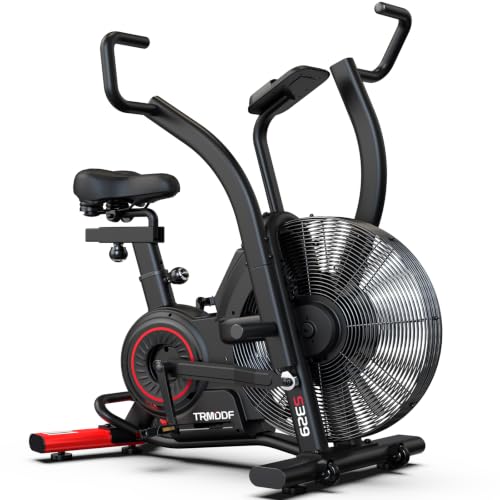
The most critical feature for shorter users is seat adjustability. Look for a bike with a wide range of vertical and horizontal seat positions. Models like the TRMDDF offer seven height positions and five fore-aft adjustments, allowing you to dial in the perfect leg extension.
A seat that goes low enough ensures your feet can comfortably reach the pedals at the bottom of the stroke. If the seat cannot go low enough, you will struggle with inefficient pedaling and potential knee strain.
Handlebar Design and Reach
Handlebar reach is another key factor. Some air bikes have fixed handlebars that may be too far forward for shorter arms. Look for models with multi-grip handlebars or adjustable handlebar positions to bring the grips closer to you.
The TRMDDF and GYMAX models feature dual-action handlebars that move with your arms, which can be more forgiving for different torso lengths. Check the handlebar height and distance from the seat before buying.
Frame Size and Weight Capacity
A compact frame is often better for shorter riders because it reduces the overall footprint and makes mounting and dismounting easier. However, do not sacrifice stability. The TRMDDF supports up to 350 pounds, giving you a sturdy platform regardless of your height.
Shorter riders may also appreciate a lower step-through height. Some models, like the Marcy AIR-1, have a more open frame design that allows easy access without having to swing a leg over a high top tube.
Resistance Type and Cooling
Air resistance is naturally progressive: the harder you pedal, the more resistance you feel. This is great for high-intensity interval training. The fan also creates a cooling breeze, which is a bonus for shorter riders who may generate less airflow due to a lower pedaling speed.
Look for models with large fan blades and wide air supply zones, like the TRMDDF with its 700mm wide air supply. This ensures you stay cool even during tough workouts.
Final Thoughts
After evaluating each model, we recommend the TRMDDF Indoor Upright Air Resistance Fan Bike for its exceptional adjustability and sturdy build, making it the best air bike for short people who want a premium experience. For a budget-friendly option that still offers solid adjustability, the Marcy Fan Exercise Bike with Air Resistance System is a reliable choice that provides great value without compromising on fit.
Related Guides
Frequently Asked Questions
What is the minimum height for an air bike? Most air bikes accommodate riders as short as 5’1″ when the seat is adjusted to its lowest position. The TRMDDF model specifically fits users from 5’1″ to 6’3″, making it a versatile choice for shorter individuals. For more insights, check out our guide on best air bike for home gym.
Can short people use air bikes comfortably? Yes, as long as the bike offers sufficient seat and handlebar adjustability. Models with a low minimum seat height and shorter handlebar reach are ideal. Always check the manufacturer’s recommended height range before purchasing.
Do air bikes require assembly? Yes, most air bikes require some assembly. The process typically takes 30 to 60 minutes and involves attaching the base, seat post, handlebars, and pedals. Most models include clear instructions and basic tools.
Are air bikes good for low-impact cardio? Air bikes provide smooth, joint-friendly resistance that is excellent for low-impact cardio. The fan-based system allows you to control intensity by pedaling speed, making it suitable for both gentle recovery rides and intense sprints.


