
You have carved out thirty minutes for a workout, but the gym is crowded, the parking lot is full, and the commute feels like a chore. An air rower at home changes that equation entirely. It delivers a full-body, low-impact workout that engages your legs, core, arms, and back in one smooth motion. This guide reviews the best air rowers of 2026, helping you choose a model that fits your space, fitness level, and budget. Whether you are a beginner or an experienced athlete, we have you covered. For more on choosing the right machine, check out our guide to the best rowing machines for home.




Buying Guide: What to Look for in an Air Rower
Resistance Type and Adjustability
Air rowers use a fan blade that creates resistance proportional to your effort. The harder you pull, the more resistance you feel. Some models add magnetic resistance for fine-tuning, like the dual air and magnetic system on the Aviron Strong Series Rower. For most users, a rower with 8 to 16 levels of adjustable airflow offers enough variety for progressive training. If you prefer a more consistent feel, look for machines that allow you to set a specific resistance level rather than relying solely on stroke speed.
Display and Connectivity
A clear monitor helps you track key metrics such as time, distance, stroke rate, and calories burned. Smart features like Bluetooth connectivity allow you to sync with fitness apps such as Zwift or Kinomap for virtual rowing experiences. Models like the Aviron Strong Series Rower: 22″ HD Touchscreen offer built-in streaming and game-based workouts, while others pair with free apps like SunnyFit or müüv. If you enjoy data-driven training, choose a rower with heart rate monitor compatibility and app integration.
Build Quality and Weight Capacity
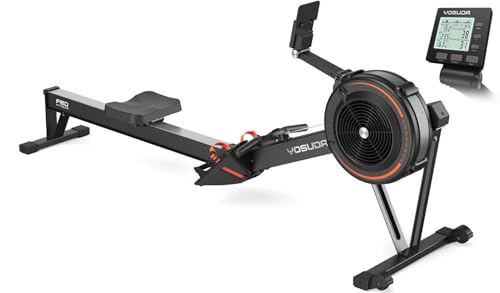
Durability matters for long-term use. Look for a steel or aluminum frame with a high weight capacity, ideally 300 pounds or more. The YOSUDA R2 Professional Air Rowing Machine supports up to 350 pounds, while the GMWD Lava Flow Series handles up to 500 pounds. A reinforced rail and smooth-rolling seat ensure stability during intense sessions. For more on durability, read our review of top home treadmills for similar build considerations.
Storage and Footprint
Air rowers are typically long, but many fold vertically or separate into two pieces for compact storage. The Sunny Health & Fitness Premium Smart Air folds vertically to tuck against a wall, while the YOSUDA R2 breaks into two parts for upright storage. If space is tight, choose a model with a foldable design and built-in transport wheels. This makes it easy to move the rower out of the way after your workout.
Final Thoughts
After evaluating the top options, we recommend the Aviron Strong Series Rower: 22″ HD Touchscreen for those who want an immersive, game-based experience with dual resistance, and the Sunny Health & Fitness Premium Smart Air for budget-conscious buyers who still want smart app integration and a compact foldable design. Both deliver excellent full-body workouts and are built to last.
Frequently Asked Questions
How does an air rower differ from a magnetic rower?
An air rower uses a fan blade that creates resistance based on your pulling speed, offering a more dynamic, on-water feel. Magnetic rowers use magnets for quieter, more consistent resistance. Both are effective, but air rowers are often preferred for high-intensity interval training. Learn more in our guide to water rowing machines.
Is an air rower good for weight loss?
Yes, air rowing burns significant calories by engaging multiple muscle groups. With consistent use, it can support weight loss goals. Many models also connect to fitness apps that track your progress, helping you stay motivated.
Can I use an air rower if I have back pain?
Air rowing is low-impact and can be gentle on the joints, but proper form is essential. Start with a low resistance and focus on a smooth, controlled stroke. If you have chronic back issues, consult a healthcare professional before starting.
How much space do I need for an air rower?
Most air rowers require about 7 to 8 feet of length and 2 feet of width when in use. Many models fold or separate for storage, reducing the footprint to around 2.5 by 3 feet. Measure your space before buying to ensure a good fit.