

🔥 Black Friday Exercise Bike Deals: picks worth watching →
You have your Zwift subscription ready, a smart trainer or bike on your mind, but you are not sure which exercise bike will give you the most realistic and enjoyable virtual ride. The best exercise bikes for Zwift combine smooth resistance, stable frames, and connectivity that makes every climb and sprint feel authentic. Whether you are a seasoned racer or a casual rider looking to escape the weather, this guide covers seven top models that can transform your indoor training experience.
We focus on bikes that pair well with Zwift’s virtual world, offering magnetic resistance, quiet operation, and adjustable fit for long sessions. From budget-friendly options to feature-rich smart bikes, our picks help you pedal through Watopia without compromise. Let’s dive into the details.




Buying Guide
Resistance Type and Smoothness
For Zwift, magnetic resistance is your best friend. It offers near-silent operation and consistent tension that mirrors road gradients. Bikes like the Yesoul G1M and MERACH models provide 100 or more resistance levels, letting you fine-tune effort for every virtual hill. Friction-based systems can work, but they wear out faster and create noise that might distract you during group rides.
A smooth belt drive system also reduces maintenance and keeps the ride fluid. Check for flywheel weight: heavier flywheels (around 25 lbs) offer a more realistic road feel, while lighter ones can still work well with magnetic resistance for quick response.
Connectivity and Smart Features
Zwift relies on data like cadence, speed, and power. The Yesoul G1M includes a 21.5-inch FHD screen and Bluetooth to sync with the YESOUL app, but for Zwift, you will need a separate device or a bike that supports ANT+ or Bluetooth FTMS. The MERACH bike with its built-in screen can run Zwift directly, while budget models like the CURSOR FITNESS bike work best with an external cadence sensor and your phone or tablet.
Consider a tablet holder or screen mount for easy viewing. Many bikes in our list come with these, making it simple to follow Zwift routes without extra gear.
Stability and Weight Capacity
High-intensity Zwift races or steep climbs demand a rock-solid base. The YOSUDA and SLUNSE FITNESS bikes feature heavy-duty steel frames with weight capacities up to 350 lbs, ensuring no wobble during sprints. A wider H-shaped base, like on the Yesoul G1M, adds extra stability for riders of all sizes. For more on frame design, check our guide on best stationary spin bikes.
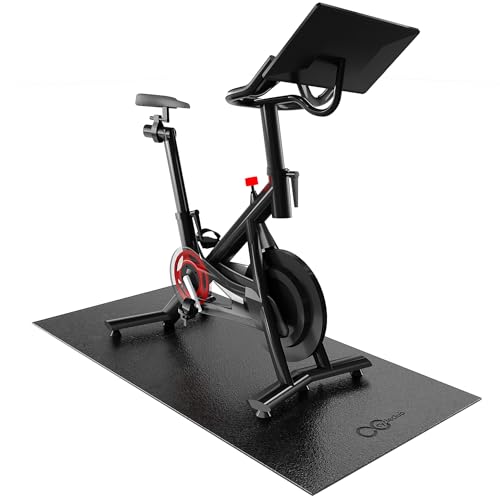
If you have hardwood floors, a protective mat like the Cycleclub Exercise Bike Mat prevents scratches and absorbs vibration. It is a small investment that keeps your setup clean and quiet.
Adjustability and Comfort
Long Zwift sessions require a comfortable fit. Look for 2-way or 4-way adjustable seats and handlebars. The CURSOR FITNESS bike accommodates riders from 4’8″ to 6’5″, while the Superun bike offers multiple seat positions for proper knee alignment. A padded, competition-style seat can reduce soreness during hour-long rides.
Pedal type matters too: cage pedals work with regular shoes, but SPD clips offer a more efficient power transfer. Some bikes include both options.
Final Thoughts
Choosing the best exercise bikes for Zwift comes down to your budget and feature needs. For a smart, immersive experience with a built-in screen, the Yesoul G1M Screen Exercise bike with Bluetooth stands out with its 21.5-inch display and 100 resistance levels. If you prefer a more affordable entry point that still delivers smooth magnetic resistance and app compatibility, the MERACH Exercise Bike with Screen offers excellent value for Zwift newcomers. Both bikes pair well with virtual cycling platforms and provide the stability and adjustability you need for consistent training.
Frequently Asked Questions
Can I use any exercise bike with Zwift?
Most exercise bikes can work with Zwift if you add a cadence sensor and speed sensor. However, bikes with Bluetooth FTMS or ANT+ connectivity offer direct power and cadence data for a more accurate experience. Smart bikes with built-in screens, like the Yesoul G1M, can run Zwift natively.
Do I need a smart bike for Zwift, or can I use a regular spin bike?
You can use a regular spin bike with Zwift by attaching third-party sensors. However, a smart bike with automatic resistance adjustment makes the experience much more immersive, as it changes tension based on the virtual terrain. For casual riding, a standard bike with manual resistance works fine.
What resistance level is best for Zwift training?
Zwift adjusts resistance automatically if your bike supports it. For manual bikes, aim for a resistance that simulates a moderate climb (around 60-70% of your max effort) for interval training, and lower levels for recovery rides. Bikes with 100 resistance levels give you fine control.
How do I connect my exercise bike to Zwift?
Most modern exercise bikes connect via Bluetooth to the Zwift app on a phone, tablet, or computer. Check your bike’s specifications for FTMS or ANT+ support. For older bikes, you can use a separate speed and cadence sensor that pairs with Zwift. For more on bike types, see our exercise bikes overview.

