
You’ve decided to bring a rowing machine into your home, and you’re leaning toward air resistance. Smart move. Air rowers deliver a dynamic, self-regulating workout that mimics the feel of on-water rowing, and they’re built to last. But with so many models on the market, how do you choose the right one for your fitness goals, space, and budget? This guide breaks down the top air resistance rowing machines, highlighting what makes each one stand out, and offers a practical buying guide to help you decide.





Buying Guide: What to Look for in an Air Rowing Machine
Resistance System and Feel
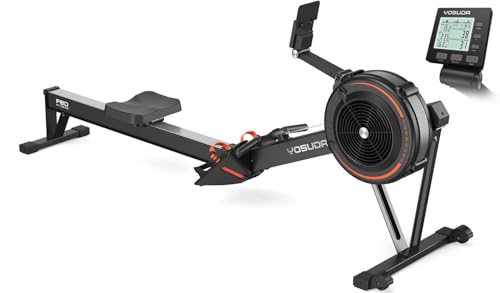
Air resistance is created by a flywheel with fan blades. The harder you pull, the more air resistance you generate. This means the workout intensity scales with your effort, which is great for interval training and progressive overload. Look for machines with adjustable air dampers or multiple resistance levels, like the YOSUDA R2’s 10-level system or the GMWD’s 10 levels, to fine-tune the challenge.
The smoothness of the stroke is also crucial. A well-balanced flywheel and a quality rail system ensure a fluid motion that’s easy on your joints. The Concept2 RowErg is renowned for its silky-smooth feel, while the Merach RS3 offers a unique scull-style motion that adds variety. Consider what feels more natural to you.
Frame Durability and Weight Capacity
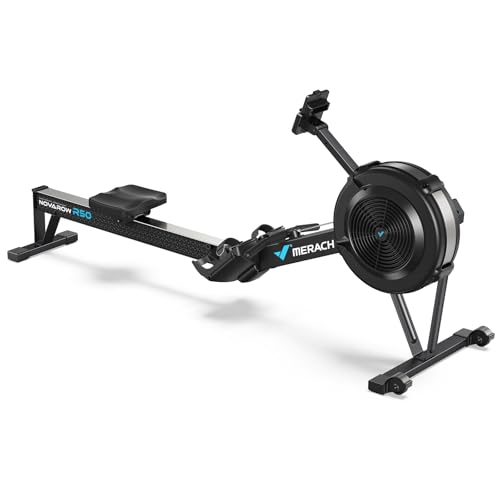
You don’t want a rower that wobbles or feels flimsy mid-stroke. Pay attention to the frame material: steel and aluminum are common. The GMWD and THERUN models feature reinforced steel frames, while the Concept2 uses aluminum front legs and steel rear legs. Check the user weight capacity. The Concept2 and GMWD support up to 500 lbs, which is excellent for larger users. The YOSUDA and Merach R50 Pro hold up to 350 lbs, which is still solid for most people.
Also, consider the rail length. A longer rail accommodates taller users. The YOSUDA R2 offers a 53.7-inch rail, fitting users up to 6’10”, while the GMWD’s 50-inch rail suits up to 6’3″. If you’re on the taller side, prioritize a longer rail.
Monitor and Connectivity
A good monitor tracks your essential metrics: time, distance, calories, stroke rate, and split time. The Concept2’s PM5 is the gold standard, offering accurate data and Bluetooth connectivity. Many rowers now sync with apps like Zwift, Kinomap, or the free FitShow app. The Merach R50 Pro has a backlit display with 20+ training modes. If you’re into data-driven training, look for a monitor that provides the metrics you care about and connects to your favorite apps.
Some monitors are self-powered, like the YOSUDA R2’s KER system, which eliminates the need for batteries. Others, like the Concept2, draw power from the flywheel during workouts. Consider how important battery life is for you.
Storage and Assembly
Space is a premium in most homes. Look for rowers that fold or separate into two pieces for vertical storage. The Concept2 separates easily, and the GMWD folds in seconds. Most models come with caster wheels for easy movement. Assembly time varies: the Merach RS3 is 85% pre-assembled, while the GMWD arrives 90% assembled. Check the product details to ensure you’re comfortable with the setup.
If you’re short on space, a foldable model like the Stamina ATS is a great choice. It’s also one of the most budget-friendly options. For more space-saving tips, check out our best rowing machine for home guide.
Final Thoughts
Choosing the right air rower comes down to your priorities: if you want the industry standard for performance and durability, the Concept2 RowErg Indoor Rowing Machine is an unbeatable investment. If you’re looking for a versatile, feature-rich option that won’t break the bank, the YOSUDA R2 Professional Air Rowing Machine Indoor offers excellent value with its adjustable resistance and smart connectivity. Both will give you a challenging, full-body workout for years to come.
Related Guides
Frequently Asked Questions
Are air rowing machines better than magnetic ones?
Air rowers provide a more realistic, dynamic resistance that increases with your effort, making them great for intense interval training. Magnetic rowers offer a quieter, smoother, and more adjustable experience, but the resistance is often capped. For a true rowing feel, air is the way to go. If you’re debating between the two, read our rowing machine vs exercise bike comparison for more insights.
How much space do I need for an air rower?
Most air rowers require a footprint of about 8 to 9 feet in length and 4 feet in width for safe operation. The Concept2 recommends 9×4 feet. However, many models fold or separate for vertical storage, so you only need that space during your workout. Measure your room and consider the storage options.
Can air rowers support heavy users?
Yes, many air rowers are built with robust frames and high weight capacities. The Concept2 RowErg and GMWD models support up to 500 lbs, making them suitable for larger individuals. Always check the manufacturer’s specifications to ensure the rower meets your needs.
What is the best air rower for seniors?
For seniors, a rower with a low seat height and smooth, low-impact motion is key. The Concept2 has a 14-inch seat height, which is easier to get on and off. The Stamina ATS is also a budget-friendly option with a comfortable padded seat. For more tailored recommendations, see our best rowing machine for seniors guide.