
If you have ever winced climbing onto a standard spin bike, you know the appeal of a recumbent. The wide seat, the back support, the relaxed leg angle: it all adds up to a ride you can actually sustain. That is exactly why so many people searching for the best recumbent exercise bike for home use want comfort first, without sacrificing a real workout.
We assessed eight models from Niceday, MERACH, YOSUDA, and other brands, focusing on frame stability, seat adjustability, resistance range, and noise. Whether you are recovering from knee surgery or simply want a low-impact cardio habit, this guide will help you match the right bike to your body and your living space. If you are brand new to indoor cycling, our best exercise bike for beginners guide is a helpful companion read.




What to Look for in a Home Recumbent Bike
Before you compare models, narrow your priorities. A recumbent bike is a long-term purchase, and the details that matter most are rarely the flashiest ones. Here are the four criteria we weighed most heavily.
Weight Capacity and Frame Stability
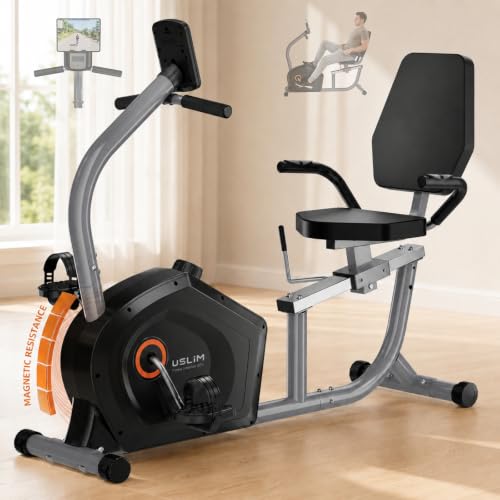
A recumbent frame takes stress differently than an upright bike because you lean back into it. Look for commercial-grade steel and a stated capacity that leaves headroom above your weight. The Kawnina and XVGVSV models both support up to 400 pounds or more, while the Niceday and USLIM bikes also rate at 400 pounds.
Stability matters as much as raw capacity. A bike that wobbles at speed is unsafe, especially for seniors or anyone recovering from injury. If joint protection is your main concern, our guide to the best exercise bike for arthritic knees digs deeper into low-impact options.
Seat Comfort and Adjustability
You will spend every minute of every ride on that seat, so padding and back support are not luxuries. Breathable mesh backrests, like those on the Kawnina and MERACH high-end model, keep you cool during longer sessions. A stepless or multi-position seat rail lets riders of different heights share one bike.
Check the inseam range before buying. Most models here fit riders from roughly 4’9″ to 6’2″, and the Niceday accommodates heights up to 6’3″.
Resistance Range and Quiet Operation
Magnetic resistance is the standard for home recumbents because it is smooth and nearly silent. A 16-level range covers gentle rehab pedaling all the way up to challenging endurance work. The MERACH S08 and high-end model use 8-level car-style levers instead, which some riders find quicker to adjust mid-ride.
Noise matters if you live in an apartment or ride early in the morning. Belt-driven magnetic systems on the USLIM and XVGVSV bikes run below 10 dB, quiet enough to pedal while others sleep. For a broader look at home cardio setups, see our roundup of the best spin bikes for home use.
Assembly, Portability, and Smart Features
Most recumbents arrive 80 to 90 percent pre-assembled, and a 30-minute setup is typical. Front transport wheels make it easy to roll the bike between rooms, which matters if your workout space doubles as a living area. Bluetooth app connectivity on the Kawnina, MERACH, and Niceday bikes adds virtual routes and workout tracking if that motivates you.
Final Thoughts
For most households, the Kawnina Recumbent Exercise Bike for Home with Arm stands out for its full-body arm exerciser, 420-pound capacity, and plush mesh backrest, making it a superb all-around choice. If you want a lighter, app-connected ride with easy car-style resistance shifts, the MERACH Recumbent Exercise Bikes for Home High-end is an excellent alternative. Whichever you pick, prioritize the seat and frame that fit your body, and the daily habit will follow.
Frequently Asked Questions
Is a recumbent bike good for home use?
Yes. Recumbent bikes are among the most home-friendly cardio machines because they are quiet, stable, and gentle on the back and joints. They take up more floor space than upright bikes, so measure your room before ordering.
Are recumbent bikes good for seniors?
They are excellent for seniors. The backrest supports the spine, the step-through frame is easy to mount, and the wide seat reduces pressure on the hips. Many models here, including the USLIM and XVGVSV bikes, are designed specifically with older riders in mind.
How much space do I need for a recumbent exercise bike?
Most recumbents need roughly 4 to 5 feet of length and 2 feet of width, plus clearance behind the seat for mounting. The MERACH S08 measures about 52 inches long by 25 inches wide, which is typical for the category.
Can I use a recumbent bike for knee rehab in 2026?
Many physical therapists recommend recumbent bikes for knee recovery because the reclined position reduces joint load. Start with low resistance and short sessions, and clear it with your doctor first. Our best exercise bike for ACL recovery guide covers this in more detail.