
Recovering from an injury, surgery, or managing a chronic condition often requires gentle, controlled movement. A recumbent bike offers a safe way to rebuild strength and mobility without putting undue stress on your joints. In this guide, we review the best recumbent bike for physical therapy, focusing on models that prioritize comfort, adjustability, and low-impact motion. Whether you’re a senior working on balance or an athlete returning from a knee injury, these bikes are designed to support your rehabilitation journey.
We’ve evaluated seven top-rated recumbent bikes, considering factors like seat comfort, resistance smoothness, frame stability, and ease of use. Our goal is to help you find a bike that feels like a partner in your recovery, not just another piece of gym equipment. For those who need extra room, you might also want to check our guide on the best recumbent bike for big and tall riders.




Buying Guide: What to Look for in a Physical Therapy Recumbent Bike
Adjustable Seat and Ergonomic Support
During physical therapy, comfort is non-negotiable. Look for a bike with a wide, cushioned seat and a backrest that offers lumbar support. The seat should slide forward and backward to accommodate different leg lengths, ensuring your knees don’t overextend. Many models, like the JOROTO Recumbent Exercise Bike for Seniors Adults, feature a step-through design, making it easier to get on and off without straining.
Ergonomic handlebars are also important. They should be easy to grip and positioned so you can maintain a relaxed posture. Some bikes offer adjustable handlebars, which is a plus if multiple people will be using the bike.
Resistance Levels and Smoothness
For physical therapy, you need a bike with a wide range of resistance levels, from very light to moderately challenging. Magnetic resistance is ideal because it provides a smooth, quiet ride without the jolting of friction pads. The ability to fine-tune resistance lets you progress gradually as your strength improves. For example, the Schwinn 280 Recumbent Bike offers 100 magnetic resistance levels, giving you precise control.
Also, consider the flywheel weight. A heavier flywheel tends to offer a more consistent pedaling motion, which can be comforting during rehabilitation. However, even lighter flywheels can work well if the magnetic system is well-designed.
Frame Stability and Weight Capacity
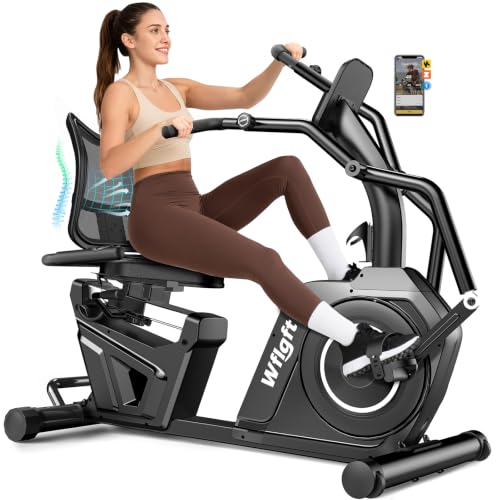
A stable frame is crucial for safety, especially when you’re building balance and coordination. Look for a bike with a heavy-duty steel frame and a wide base. Weight capacity is another key factor; a higher capacity often indicates a more robust construction. The WFLGFT Recumbent Exercise Bikes supports up to 450 lbs, making it a solid choice for larger individuals.
If you have limited space, check the bike’s footprint. Some models are more compact, and we’ve covered options in our article on the best recumbent bike for small spaces.
Extra Features for Rehabilitation
Some recumbent bikes come with additional features that can enhance your therapy sessions. For instance, moving handlebars allow for upper body exercise, which is great for full-body rehabilitation. The Sunny Health & Fitness Smart Recumbent Bike includes resistance bands for arm workouts. Also, consider a bike with a heart rate monitor and easy-to-read display to track your progress. Bluetooth connectivity and fitness apps can provide guided workouts, which can be motivating during long recovery periods.
If you’re specifically interested in a bike that offers both arm and leg exercise, be sure to read our dedicated guide on the best recumbent bike with arm workout.
Final Thoughts
Choosing the right recumbent bike for physical therapy can make a significant difference in your recovery. For those who need maximum comfort and a high weight capacity, the JOROTO Recumbent Exercise Bike for Seniors Adults stands out with its senior-friendly design and sturdy build. If you prefer a bike with a wide range of resistance and app connectivity for guided rehab, the Schwinn 280 Recumbent Bike is an excellent investment. Both bikes are designed to support low-impact, effective rehabilitation, helping you regain strength and confidence.
Frequently Asked Questions
Can a recumbent bike help with physical therapy?
Yes, recumbent bikes are often used in physical therapy because they provide a low-impact cardiovascular workout that is gentle on the joints. The reclined position also offers good back support, making it suitable for people with balance issues or those recovering from surgery. Always consult with your physical therapist to determine the appropriate resistance and duration for your specific condition.
What is the difference between a recumbent bike and an upright bike for rehab?
Recumbent bikes have a larger, chair-like seat with a backrest, placing you in a reclined position. This reduces stress on the lower back and wrists, and it’s easier to get on and off. Upright bikes require more core stability and a forward-leaning posture, which may not be ideal for everyone during rehabilitation. For more insights, you can check our article on top exercise bikes for seniors over 65.
How long should I use a recumbent bike for physical therapy?
Start with short sessions of 5 to 10 minutes, gradually increasing to 20-30 minutes as your endurance improves. The key is to listen to your body and avoid overexertion. Your physical therapist can provide a personalized plan based on your recovery goals and current fitness level.
Are recumbent bikes good for seniors with balance issues?
Absolutely. The step-through frame and low seat height make them much safer than upright bikes for those with balance concerns. The stable base and supportive backrest reduce the risk of falls, allowing seniors to exercise with confidence. Many models, such as the JOROTO and MERACH, are specifically designed with senior-friendly features.