
You’ve noticed that getting up and down from a traditional upright bike is getting harder. Your knees ache, your back complains, and you just want a way to stay active without fear of falling. A recumbent bike for seniors solves this: you sit in a wide, supportive chair-like seat with your legs reaching forward, making mounting and dismounting a breeze. This guide focuses exclusively on recumbent bikes that offer superior comfort, easy step-through access, and low-impact cardio, helping you maintain independence and heart health from the safety of your living room. If you’re also curious about other senior-friendly options, our guide to the best exercise bikes for seniors covers upright and recumbent choices.





Buying Guide: What to Look For in a Senior-Friendly Recumbent Bike
Choosing the right recumbent bike goes beyond just picking a model. For seniors, certain features matter more than others. Here are the four most critical factors to evaluate before making your decision.
1. Step-Through Frame and Ergonomic Seat
The number one reason seniors choose recumbent bikes is the ease of getting on and off. Look for a design with a low, open frame that you can step over without lifting your leg high. The seat should be wide, well-padded, and have a supportive backrest that cradles your lower back.
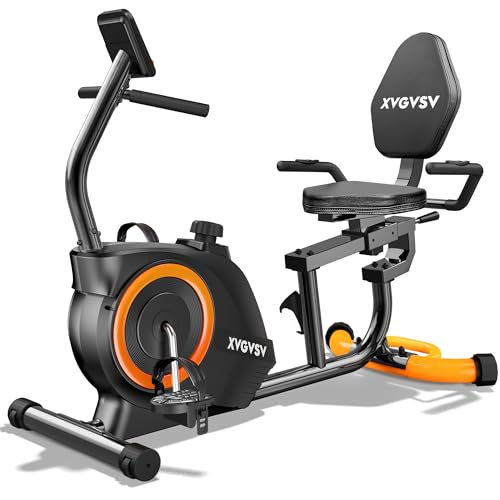
Many models, like the Recumbent Exercise Bike for Home, feature a lever-based seat adjustment that allows you to slide forward or backward without having to dismount. This is a huge safety advantage for seniors with limited mobility.
2. Adjustable Magnetic Resistance for Joint-Friendly Workouts
Magnetic resistance provides a smooth, quiet ride that’s gentle on your knees and hips. Unlike friction pads, magnetic systems don’t jerk or grind, making them ideal for seniors with arthritis or joint pain. Look for a bike with at least 8 levels of resistance, so you can start with a very light pedal and gradually increase intensity as your strength improves.
For example, the MERACH Recumbent Exercise Bikes for Home High-end offers 8 levels, while many budget models provide 16 levels for even finer tuning. The key is having a range that starts low enough for rehabilitation and goes high enough for a challenging cardio session.
3. Stability and Weight Capacity
A senior’s bike must feel rock-solid. Check the frame material and the weight capacity. Commercial-grade steel frames with a capacity of at least 300 pounds offer the most stability. Wider bases and lower centers of gravity also reduce the risk of tipping.
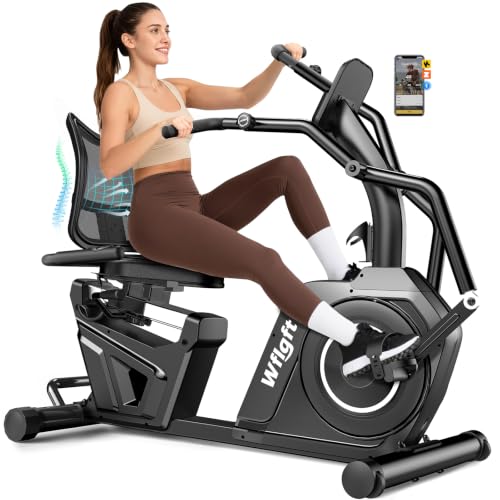
The WFLGFT Recumbent Exercise Bikes boasts a heavy-duty frame supporting up to 450 pounds, giving you confidence during every workout. Always prioritize a bike that feels planted, even when you’re pedaling at your fastest.
4. Ease of Assembly and Convenience Features
No one wants to spend hours with a wrench. Look for bikes that are at least 80% pre-assembled. Features like transport wheels, a water bottle holder, and a tablet or phone mount add convenience. A clear, easy-to-read LCD display that shows speed, distance, time, and heart rate helps you stay motivated.
The Sunny Health & Fitness Smart Recumbent Bike goes a step further with built-in resistance bands for a full-body workout, and it connects to a free fitness app for guided sessions. For a more detailed look at the top recumbent models across all categories, see our complete recumbent bike guide.
Final Thoughts
Choosing the best recumbent bike for seniors comes down to finding a model that makes you feel safe, comfortable, and eager to ride. For most seniors, the Recumbent Exercise Bike for Home offers an unbeatable combination of ergonomic design, quiet magnetic resistance, and a high weight capacity at an accessible price point. If you want a more feature-rich option with app connectivity and a thicker, breathable seat, the MERACH Recumbent Exercise Bikes for Home High-end is an excellent upgrade that still prioritizes comfort. Both bikes will help you stay active and independent for years to come.
Frequently Asked Questions
Are recumbent bikes good for seniors with knee problems?
Yes, recumbent bikes are excellent for seniors with knee issues. The reclined position reduces stress on the knee joints, and the smooth magnetic resistance allows you to pedal without impact. Always start with low resistance and consult your doctor before beginning any new exercise program.
What is the easiest recumbent bike to get on and off?
Look for a bike with a low, open step-through frame and a wide, adjustable seat. Models like the Recumbent Exercise Bike for Home feature a lever-based seat slider that lets you adjust the distance without getting off, making entry and exit much easier.
How much space do I need for a recumbent bike?
Most recumbent bikes have a footprint of about 4 feet long by 2 feet wide. Measure your available space before purchasing. Many models come with transport wheels, so you can easily move them out of the way when not in use.
Can seniors use a recumbent bike every day?
Yes, daily low-impact cardio is generally safe and beneficial for seniors. The recumbent position supports your back and reduces joint strain, allowing for regular use. Listen to your body, start with short sessions, and gradually increase duration. For more tips on choosing the right bike for your home, check our home exercise bike guide.